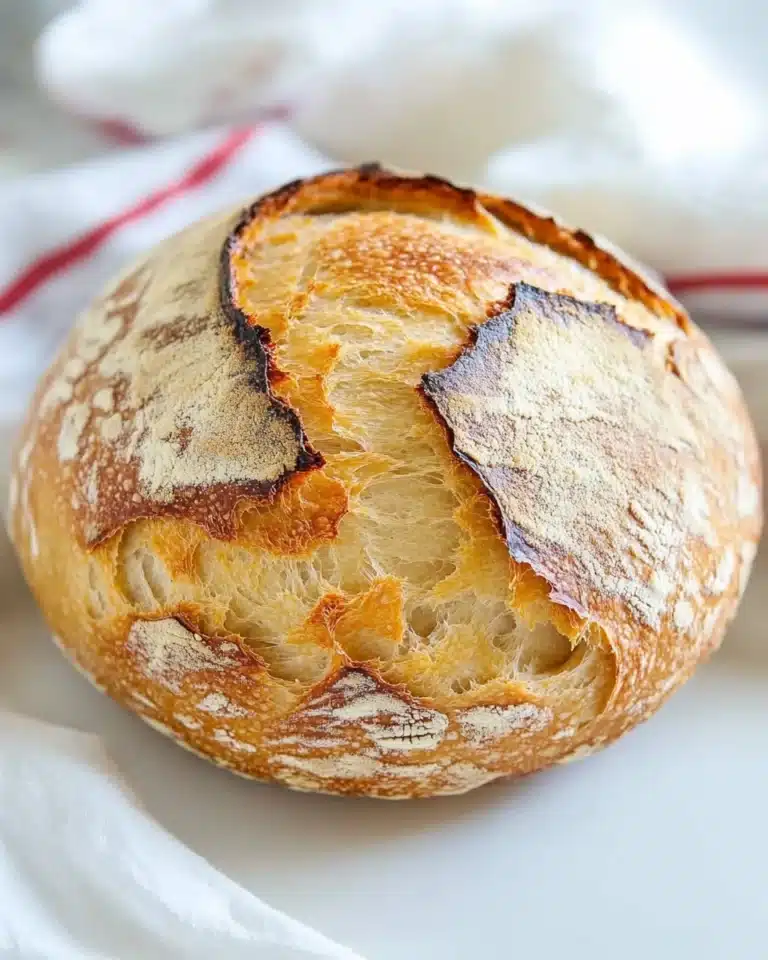
If you’ve ever dreamed of creating bakery-worthy bread right in your own kitchen, then this Homemade Artisan Bread Recipe is about to become your new best friend. This beautiful loaf is all about simplicity, flavor, and that irresistible crust that crackles just right every time. With only a handful of easy-to-find ingredients and a bit of patience, you’ll end up with a bread that tastes like it took hours of skill to make—perfectly rustic on the outside, soft and chewy inside. Whether you’re a newbie or an experienced baker, this recipe fills your home with the warm aroma of freshly baked bread and fills your soul with satisfaction.
Ingredients You’ll Need

Here’s the wonderful secret: you need just a few simple, essential ingredients to make this bread come alive. Each component plays a vital role—from the hearty texture of bread flour to the tang of coarse salt, and the life-giving rise from instant yeast.
- Bread flour (3 and 1/4 cups / about 430g): Using bread flour ensures a chewy texture and great structure, making your loaf sturdy yet soft inside.
- Instant yeast (2 teaspoons): This gets your dough rising quickly without fuss, creating those fantastic air bubbles.
- Coarse salt (2 teaspoons): Adds a crunchy, flavorful punch that’s far superior to table salt; it elevates the bread’s taste beautifully.
- Water (1 and 1/2 cups / 360ml, about 70°F or 21°C): The backbone of the dough, water hydrates the flour and activates the yeast, kickstarting the rise.
- Cornmeal (optional, for dusting): Great for keeping your bread from sticking to the baking surface and adds a subtle texture to the crust.
How to Make Homemade Artisan Bread Recipe
Step 1: Mix Dry Ingredients and Add Water
Start by whisking together your bread flour, instant yeast, and coarse salt in a large, ungreased bowl. Pour in the water slowly and mix gently with a spatula or spoon until a shaggy dough forms. It might look a little rough and sticky, but that’s the charm of artisan bread—don’t be tempted to add extra flour. Use your hands if needed to fully incorporate the flour; this tactile step connects you to the dough in a beautiful way.
Step 2: Let the Dough Rise at Room Temperature
Cover your dough tightly with plastic wrap and leave it to rise on the counter for 2 to 3 hours. You’ll know it’s ready when it nearly doubles in size and bubbles appear on its surface. This initial rise is crucial for developing the gluten structure and flavor foundation of your bread.
Step 3: Refrigerate for Depth of Flavor
For the absolute best texture and taste, pop your covered dough into the fridge for at least 12 hours, and up to 3 days. This slow fermentation deepens the flavor, giving your bread that complex, artisan taste everyone raves about. Don’t worry if the dough deflates a little during this time—that’s perfectly normal.
Step 4: Shape the Loaves
When you’re ready, dust a large nonstick baking sheet with flour or cornmeal. Turn your cold dough onto a floured surface and divide it in half. Shape each half into a long loaf, roughly 9 by 3 inches, and place them spaced apart on your baking sheet. Cover loosely and let them rest for 45 minutes to puff up in preparation for baking.
Step 5: Preheat Oven and Score the Bread
While your loaves rest, heat your oven to a high 475°F (246°C). Just before baking, use a sharp knife or bread lame to make three shallow slashes across each loaf’s surface—this helps control their expansion and gives that signature artisan look.
Step 6: Optional Steam for Crispy Crust
If you adore a crackly crust, place a shallow metal pan on the oven’s bottom rack as it preheats. When you slide your bread in, pour boiling water into that pan to create steam. The trapped steam crisps up the crust to perfection—something that feels like magic when you bite into your loaf.
Step 7: Bake Your Bread
Bake your prepared loaves on the center rack for 20 to 25 minutes, or until they turn a gorgeous golden brown. Tap the bottom of a loaf; if it sounds hollow, your bread is ready. To be extra sure, an instant-read thermometer should register about 195°F (90°C) at the center.
Step 8: Cool Before Slicing
Resist the urge to cut right away! Let your bread cool on a wire rack for at least 20 minutes. This lets the crumb finish setting, so you get those perfect airy holes and a crumb that’s tender yet resilient.
How to Serve Homemade Artisan Bread Recipe

Garnishes
The beauty of this bread is how effortlessly it pairs with simple, fresh garnishes. Brush with a little olive oil and sprinkle flaky sea salt for a treat or slather on garlic butter to amplify the flavors. Fresh herbs like rosemary or thyme can also be pressed into the crust before baking for a fragrant touch.
Side Dishes
This bread shines paired with everything from a warm bowl of tomato soup to crisp salads or hearty stews. It’s also divine alongside a cheese board sprinkled with cured meats, olives, and fresh fruit. The crusty texture stands up perfectly to dips like hummus or artichoke spinach dip.
Creative Ways to Present
For a rustic gathering, slice your artisan loaves thick and arrange them in a bread basket lined with a waffle towel. You can hollow out the inside and fill it with warm spinach dip for a showstopper centerpiece. Or toast slices lightly and top with smashed avocado, cherry tomatoes, or smoked salmon for an elegant appetizer.
Make Ahead and Storage
Storing Leftovers
Keep your leftover bread loosely wrapped at room temperature for up to five days to maintain that crunchy crust and chewy crumb. Wrapping too tightly can soften the crust, so a light covering like a paper bag or tea towel works best.
Freezing
You can freeze both the baked bread and the dough itself. Wrap cooled loaves tightly in plastic wrap and aluminum foil before freezing for up to three months. To freeze dough, complete the first rise, cover tightly, and freeze in an airtight container. When ready, thaw overnight in the fridge and continue as usual.
Reheating
Warm your bread in a 350°F (175°C) oven for 10 to 15 minutes wrapped loosely in foil to refresh the crust and soften the interior. For quick fixes, a toaster oven or skillet can do the trick, but be careful not to over-dry the bread.
FAQs
Can I use all-purpose flour instead of bread flour for this recipe?
Absolutely! Although bread flour gives the best chewy texture, a 1:1 substitution with all-purpose flour will still produce tasty bread. It may not have quite the same structure, but it’s an excellent backup.
What if I don’t have instant yeast? Can I use active dry yeast?
You can! Use the same amount of active dry yeast, but expect the dough to take a bit longer to rise during the first proof. Just be patient, and watch for the dough to almost double in size.
Why is resting the dough in the refrigerator important?
Chilling the dough allows slow fermentation, which develops richer flavor and a better crust texture. Think of it as the secret ingredient for that authentic artisan bread taste.
Should I add flour while shaping the dough?
Lightly flour your hands and work surface to prevent sticking, but avoid adding too much flour to the dough itself. Too much flour can make the loaf dense and dry rather than airy and tender.
How do I know when the bread is fully baked?
The best test is tapping the bottom of the loaf—it should sound hollow. Using an instant-read thermometer is even more precise; aim for 195°F (90°C) inside the loaf for perfect doneness.
Final Thoughts
There’s something wonderfully satisfying about pulling fresh, golden loaves out of your oven that you crafted yourself. This Homemade Artisan Bread Recipe is not just a recipe; it’s an invitation to slow down, enjoy the process, and savor every bite. I can’t wait for you to try it—it’s truly a game changer for your baking adventures. Happy baking, my friend!
PrintHomemade Artisan Bread Recipe

This Homemade Artisan Bread recipe delivers a deliciously crusty and chewy loaf with minimal effort. Made with simple ingredients like bread flour, yeast, salt, and water, this no-knead bread involves an easy mixing process, a long rise, and baking at high heat for the perfect golden crust. Ideal for sandwiches, toast, or alongside soups and salads, this classic artisan bread offers rich flavor and satisfying texture with versatile shaping and baking options.
- Prep Time: 10 minutes
- Cook Time: 25 minutes
- Total Time: 14 to 75 hours (includes rise and cold fermentation time)
- Yield: 2 loaves
- Category: Bread
- Method: Baking
- Cuisine: American
Ingredients
Dry Ingredients
- 3 and 1/4 cups (about 430g) bread flour (spooned & leveled), plus more for hands and pan
- 2 teaspoons (about 6g) instant yeast
- 2 teaspoons (about 9g) coarse salt
Wet Ingredients
- 1 and 1/2 cups (360ml) water, close to room temperature at about 70°F (21°C)
Optional
- Cornmeal for dusting pan
Instructions
- Mix Dry Ingredients: In a large ungreased mixing bowl, whisk together the bread flour, instant yeast, and coarse salt to combine evenly.
- Add Water and Form Dough: Pour in the room temperature water and gently mix with a silicone spatula or wooden spoon until all the flour is moistened. The dough will be sticky and shaggy; use your hands if necessary to shape it into a rough ball inside the bowl.
- First Rise at Room Temperature: Cover the bowl tightly with plastic wrap or foil and let the dough rise on the counter at room temperature for 2 to 3 hours until it nearly doubles and becomes bubbly.
- Cold Fermentation: For best flavor and texture, place the covered dough into the refrigerator for 12 to 72 hours. The dough will puff up and then may slightly deflate, which is normal.
- Shape Dough: Lightly dust a large nonstick baking sheet with flour or cornmeal. Turn the chilled dough onto a floured surface, cut it in half with a sharp knife or bench scraper, and shape into two long loaves about 9×3 inches each. Place them 3 inches apart on the baking sheet and cover loosely to rest for 45 minutes.
- Preheat Oven: While dough rests, preheat the oven to 475°F (246°C).
- Score the Loaves: Using a sharp knife or bread lame, make three shallow, half-inch deep slashes across each loaf to allow expansion during baking. If loaves flattened during the rest, reshape by narrowing sides with floured hands.
- Create Steam (Optional): Place a shallow metal or cast iron pan on the bottom rack while preheating. When ready, pour 3-4 cups of boiling water into the pan and quickly close the oven to trap steam, which helps form a crisper crust.
- Bake: Place the scored loaves on the center rack and bake for 20-25 minutes until golden brown. Tap the crust to check for a hollow sound or use an instant-read thermometer—it should register 195°F (90°C) internally.
- Cool and Store: Remove bread from oven and cool on a wire rack for at least 20 minutes before slicing. Store leftovers loosely covered at room temperature up to 5 days or refrigerate up to 1 week.
Notes
- The dough can be refrigerated for up to 3 days before shaping and baking, making it perfect for prepping ahead of time.
- You can freeze both unbaked dough (after step 3) or fully baked bread for up to 3 months. Thaw frozen dough overnight in the fridge before proceeding.
- Use bread flour for best texture; all-purpose flour can substitute in a pinch, but avoid mostly whole wheat flour to prevent density.
- Instant yeast is preferred for faster rising, but active dry yeast works fine with longer rise times.
- Coarse salt enhances flavor; if only fine salt is available, reduce quantity to 1 1/2 teaspoons.
- Shaping into a round boule is an option but requires slightly longer baking time and different baking methods like a Dutch oven.
- For baking on a pizza stone, preheat the stone and dust with cornmeal to prevent sticking.
- If you lack a nonstick pan, line baking sheets with parchment paper and dust with flour or cornmeal for best results. Monitor closely as parchment paper may burn at high heat.
- Adding minced garlic and chopped herbs to the dry ingredients before mixing can add flavor variations.